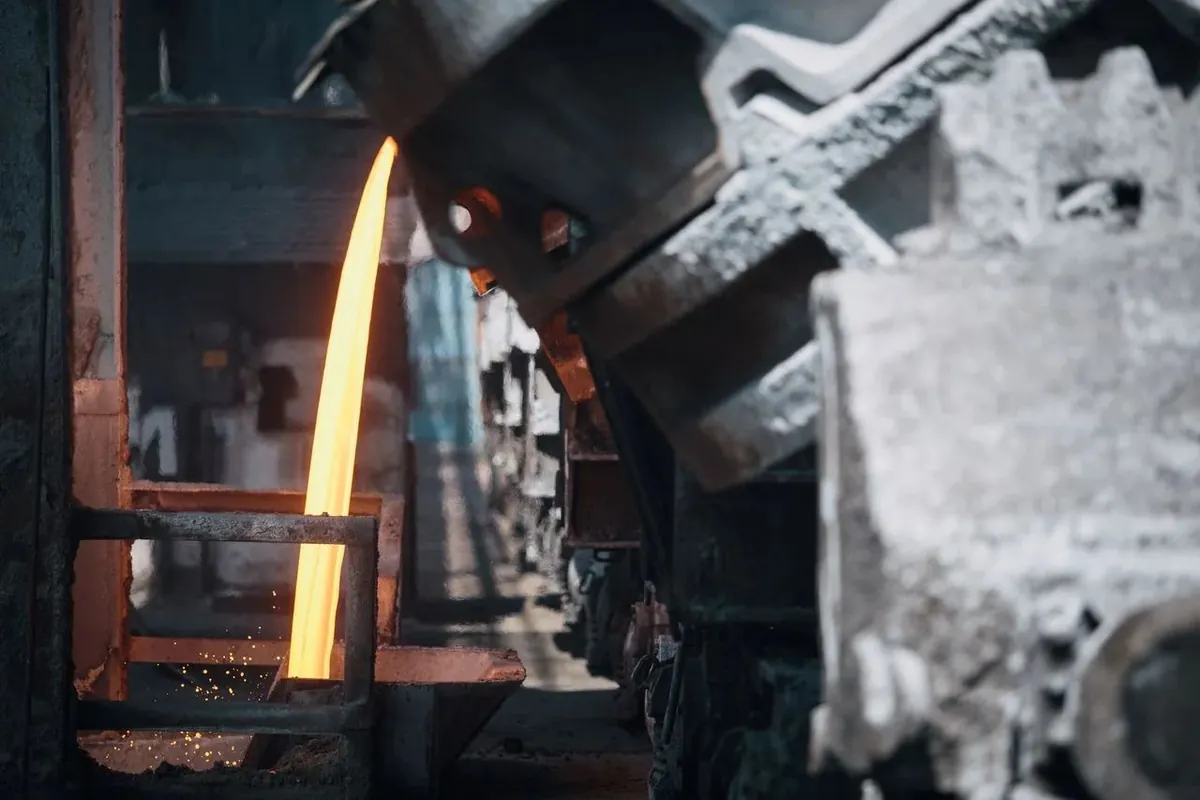
All-Electric Melting Penetration in Glass Keeps Rising, Making Specialty Melting the New Main Arena
WeiBeam · Electrode solutions for high-temperature melting
As of 2026 all-electric furnaces are being adopted across a wider range of glass types, with specialty glass, container glass and even some commodity grades beginning to try all-electric or hybrid melting. As the core conductive component, molybdenum electrodes are upgrading in both demand and technology.
In 2026 the glass industry clearly accelerated its all-electric melting practice. All-electric furnaces, once largely confined to glass fiber and high-end specialty glass, are expanding into a broader product spectrum including container glass, glass-ceramics and optical glass, and some lines are even exploring all-electric melting of commodity glass. Behind the steady rise in penetration, three changes are driving at once: environmental constraints, power conditions and process understanding.
Why all-electric melting
All-electric furnaces use electrical energy as the primary heat source and heat the glass melt directly through electrodes, and their advantages have been validated repeatedly in operating data: no regenerators or complex flue systems are needed, and nitrogen oxide and particulate emissions drop sharply; thermal efficiency is markedly higher than that of flame furnaces; electrical power can be precisely zoned and regulated, giving a more stable temperature field and flow field in the melt and greater adaptability to demanding batch recipes. In regions where renewable power accounts for a rising share, all-electric melting also carries an inherent low-carbon attribute.
- Emissions: no combustion flue gas, less pressure from environmental retrofits;
- Efficiency: electrical energy enters the melt directly, with few loss points;
- Quality: uniform temperature and a low rate of bubble and cord defects;
- Operation: flexible power regulation, suited to time-of-use electricity pricing strategies.
Electrodes are the technical high ground
Every advantage of all-electric melting rests on the premise that electrodes conduct current stably over the long term. Compared with electric boosting, molybdenum electrodes in an all-electric furnace carry the entire heat load output, with higher current density and a more complete interfacial reaction with the glass melt, so their service life and reliability directly determine line economics. Industry rollouts have also yielded lessons: matching batch conductivity to temperature, coordinating electrode layout with furnace basin geometry, and managing the interface between end water cooling and the refractory lining. Any weak link dilutes the advantages of all-electric melting. Electrode suppliers have thus evolved from material vendors into process partners, deeply involved in furnace design.

| Item | Parameter notes |
|---|---|
| Suitable process | Electric boosting and tank drawing in glass fiber tank furnaces |
| Material and purity | Pure molybdenum / lanthanum-doped molybdenum / TZM available; molybdenum main content ≥99.95% |
| Common sizes | Rod diameter Φ20-100 mm, length 150-1500 mm (custom sizes to drawing supported) |
| Applicable standards | YS/T 1312-2019, Molybdenum Electrodes; molybdenum rods per ASTM B387 / GB/T 17792; molybdenum plate and disc per ASTM B386 / GB/T 3876 |
| Working current density | 1–3A/cm² |
Outlook
The factors constraining further penetration of all-electric melting remain real: grid capacity, electricity prices and investment in high-capacity transformers. But as green power supply grows and carbon costs become explicit, the balance will keep tilting toward electrification. The next battleground for all-electric melting can be expected to be larger tonnages and more product types, with electrode power carrying capacity, service life and monitoring technology iterating in step. Whoever masters a long-life electrode solution at high current density holds the ticket to the all-electric era. As more operating data from all-electric furnaces is published, electrode selection models will also move from empirical judgment to data matching, and electrode suppliers able to provide configuration calculations and life prediction will become scarce supporting resources for all-electric furnaces, with the value of electrodes redefined as electric melting penetration grows.
Frequently asked questions
What is the key role of molybdenum electrodes in an all-electric furnace?
Compared with electric boosting, molybdenum electrodes in an all-electric furnace carry the entire heat load output, with higher current density and a more complete interfacial reaction with the glass melt, so their service life and reliability directly determine line economics.
Where do all-electric furnaces outperform conventional flame furnaces?
In regions where renewable power accounts for a rising share, all-electric melting also carries an inherent low-carbon attribute. Emissions advantage: no combustion flue gas, less pressure from environmental retrofits.
Note: this article shares general industry and technical information and is not purchasing, investment or legal advice. Specific parameters and results are governed by the mutual technical agreement and factory inspection records.
Related products
Electrodes and high-temperature molybdenum parts for this duty — specifications and selection notes are on the product pages.
Product information

Glass melting furnace molybdenum electrode
For electric boosting and all-electric melting of container, packaging, pharmaceutical, photovoltaic and electronic glass, compatible with mainstream refractories and furnace designs.
View specifications →
Fiberglass tank furnace molybdenum electrode
For electric boosting in fiberglass tank furnaces; supports bushing drawing with steadier melting and fiber quality.
View specifications →
Quartz and optical glass molybdenum electrode
For quartz, optical and glass-ceramic melting where high purity and high stability are required.
View specifications →