Occupational Health Protection in High-Temperature Workshops
WeiBeam · Electrode solutions for high-temperature melting
Protection in a high-temperature workshop has to address radiant heat, convective heat, dust and metal fume at the same time. This article distinguishes radiant heat from air temperature, explains the role of engineering measures such as heat shields, local exhaust ventilation and spot cooling, discusses job rotation, drinking water and rest arrangements, and covers the selection of personal protective equipment and the day-to-day management of health records.
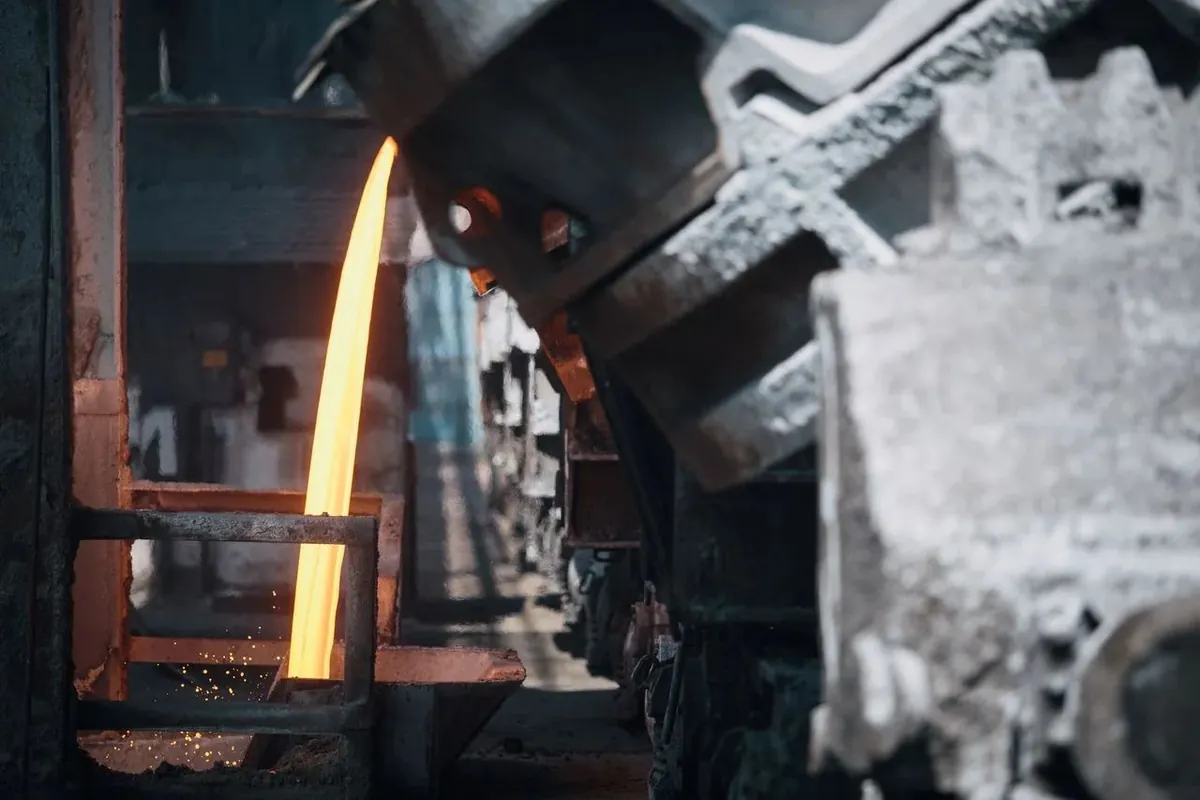
Standing two meters from the furnace door, the sensation of heat does not match the reading on the thermometer mounted on the wall. The air temperature may be only in the mid-thirties, yet the radiant heat makes it hard to stay for long. Protection measures that watch only the temperature value easily miss this layer.
Radiant and Convective Heat Need Separate Responses
Convective heat is carried away by air movement, so ventilation and air conditioning are effective; radiant heat acts directly on the body as electromagnetic waves, and shading works better than blowing air. Furnace doors, sight holes and thermocouple insertion points are all radiant sources, and heat shields, reflective panels and water-cooled baffles should follow the work sequence rather than simply being added in front of the door. The distance from the work position to the heat source and the angle of standing also change the heat load. Stepping back half a meter and adding a baffle may deliver comparable improvement, and rearranging the work layout often shows results faster than buying equipment.
Engineering Controls Before Personal Protection
Personal protective equipment is burdensome to wear in a hot environment, so anything that engineering measures can solve should not be pushed onto protective clothing. Common measures include:
- Local exhaust ventilation: capture dust and fume at the point of generation to reduce dispersion into the work area.
- Spot cooling: supply treated air to the operating position, taking care not to disrupt the airflow of the local exhaust.
- Insulation and reflection: intact furnace lining and properly closed doors cut a considerable share of both radiant and convective heat.
- Floor and access: provide rest points and drinking water points to shorten continuous heat exposure.
The airflow balance between spot cooling and local exhaust can be checked with the support of our technical services section.
Work Organization and Rotation
At the same heat load, continuous and intermittent work place different demands on the body. Splitting furnace-front work into shorter periods and alternating it with back-end tasks is common practice. New employees and returning staff need a separate acclimatization period and should not go straight into long furnace-front shifts. Drink small amounts frequently during the shift rather than a large volume at once; sugary or alcoholic drinks are not suitable substitutes for water. The rest area should differ clearly in temperature and humidity so that the body has a recovery window. The rotation schedule should name the position, not just the crew; state which period is spent at the furnace front and which at the back end, and pass on the heat load conditions of the shift at handover.
Personal Protection and Health Records
Protective clothing selection has to balance flame resistance, thermal insulation and breathability; heavy styles add burden in hot, humid conditions. Face shields and goggles protect against spatter and radiation, and gloves need both insulation and dexterity. Respiratory protection is selected according to dust and metal fume concentration, and the filter replacement interval should be written into the inspection checklist. Issue and scrapping records should also be kept for protective equipment, with damaged or failed items replaced promptly rather than kept in use because they can still be worn. On health management, pre-placement and periodic in-service examinations should follow company procedure, recording exposure time in hot positions and job changes, with duties adjusted promptly when someone is affected. The related management requirements can be implemented within the document framework described in quality and systems.
Improvement in a high-temperature workshop is rarely a one-off investment; it comes from making insulation, exhaust, rotation and records part of the daily routine. Once the details are stable, heat load becomes more controllable. Other shop-floor management experience is described in the production organization notes in the company profile.
| Parameter | Reference values and notes |
|---|---|
| Material and purity | Pure molybdenum / lanthanum molybdenum / TZM available, molybdenum content ≥99.95% |
| Standard sizes | Rod diameter Φ20–100mm, length 150–1500mm (custom machining to drawings supported) |
| Applicable standards | YS/T 1312-2019 Molybdenum Electrodes; molybdenum rods per ASTM B387 / GB/T 17792, molybdenum plates and discs per ASTM B386 / GB/T 3876 |
| Operating temperature | Approximately 1300°C in continuous service, with a short-term ceiling of approximately 1600°C |
Frequently asked questions
What do engineering controls before personal protection cover for molybdenum electrodes?
Personal protective equipment is burdensome to wear in a hot environment, so anything that engineering measures can solve should not be pushed onto protective clothing. Floor and access: provide rest points and drinking water points to shorten continuous heat exposure.
How are personal protection and health records generally handled?
On health management, pre-placement and periodic in-service examinations should follow company procedure, recording exposure time in hot positions and job changes, with duties adjusted promptly when someone is affected.
How are radiant and convective heat handled separately for molybdenum electrodes?
Convective heat is carried away by air movement, so ventilation and air conditioning are effective. Radiant heat acts directly on the body as electromagnetic waves, and shading works better than blowing air. Stepping back half a meter and adding a baffle may deliver comparable improvement, and rearranging the work layout often shows results faster than buying equipment.
Note: this article shares general industry and technical information and is not purchasing, investment or legal advice. Specific parameters and results are governed by the mutual technical agreement and factory inspection records.
Related products
Electrodes and high-temperature molybdenum parts for this duty — specifications and selection notes are on the product pages.
Product information

Ceramic fiber and refractory molybdenum electrode
For electric melting and fiberizing in ceramic fiber, rock wool and refractory fiber resistance furnaces; high-temperature erosion resistance for continuous production.
View specifications →
Molybdenum disc
Circular sheet made from high-purity molybdenum powder by powder metallurgy and rolling; used for furnace heating elements, heat shields, boats and sputtering targets.
View specifications →
Molybdenum rod and shaft
Rod and shaft diameters beyond wire: Ø0.5–25mm drawn or swaged shafts and Ø16–300mm forged or sintered rods, for vacuum electronics, guide rods, electrodes and heating elements.
View specifications →