Molybdenum Electrodes in Sichuan: Selecting for Glass Fiber, Electronic Glass and Seasonal Power Pricing
WeiBeam · Electrode solutions for high-temperature melting
Sichuan hosts glass fiber tank furnaces, electronic glass and solar furnaces side by side, so electrode consumption is structurally diverse. This article maps the product mix and the cluster roles of Chengdu, Zigong and Guang'an, analyzes how power swings under seasonal wet-dry pricing affect electrode life, and sets out selection specifications, a reference cost structure, logistics times and stocking rhythm.
Sichuan's glass industry has completed a layout adjustment over the past decade: glass fiber has concentrated in Chengdu, Guang'an and Dazhou, solar glass sits in Zigong and Luzhou, electronic glass remains in Chengdu and its surroundings, and float glass keeps only a few lines in production. For molybdenum electrodes, demand is no longer set by a single furnace type but by several process routes layered together: some furnaces run continuously for six to eight years, some operate only ten months a year, and some swing load back and forth between the wet and dry seasons. Understanding these rhythms is more useful than memorizing a single total demand figure.
Industrial Structure and Demand Characteristics
Based on publicly available operating and under-construction projects, the province's glass fiber yarn capacity is about 800,000 t/y, spread across bases in Chengdu, Guang'an and Dazhou; float glass in production is about 6,000 t/d, with lines in Chengdu, Deyang and Luzhou; on the solar side, Zigong plans a 2,000 t/d six-line furnace, and a 900 t/d line in Luzhou has entered cold repair; electronic glass is dominated by substrate and cover glass lines in Chengdu, modest in tonnage but high in added value. Add the baijiu bottle and jar glass in Luzhou and Yibin and the pharmaceutical glass around Chengdu, and you have the base load of the province's electrode demand.
Estimates usually follow two routes. The installed-base route looks at furnace tonnage, electric boosting share and electrode layout: the larger the tonnage and the higher the boosting ratio, the more electrodes per furnace. The replacement route looks at operating temperature, molten-glass corrosion and cold-repair cycles: the higher the temperature and the stronger the corrosion, the shorter the life of a single electrode. Multiplying the two, then adding cross-industry high-temperature component demand, gets close to real purchasing volume. Extrapolating from furnace count alone tends to understate glass fiber tank furnaces and overstate small container furnaces.
Two points stand out: glass fiber accounts for a large share and is concentrated in a handful of tank furnaces; among other high-temperature applications, heating elements and heat shields for aviation, defense and nuclear applications make up most of the remainder. These orders share powder metallurgy and rolling capacity with electrodes, so scheduling one squeezes the other, and delivery volatility usually originates here.
Key Furnace Clusters and Customer Types
Chengdu and its surroundings form the higher technical tier. Electronic glass substrate and cover lines mostly run 30-150 t/d; the melt is sensitive to impurities, so electrodes are often supplied in polished condition, with no oxidation tint or scratches permitted on the surface. Borosilicate furnaces for pharmaceutical glass put more weight on corrosion resistance and dimensional consistency. Such customers have long purchasing decision chains and qualify suppliers on an annual cycle; once approved, their willingness to switch suppliers is very low.
Zigong and Luzhou form the solar cluster. Local furnaces use oxy-fuel combustion with electric boosting at about 25%, and furnace pressure and fining temperature are controlled differently from air-fired furnaces, with electrodes positioned closer to the fining zone. Customers are mostly bases of larger groups: centralized purchasing, project-based tenders, and high sensitivity to delivery milestones. Once a cold-repair window is fixed, arriving a week late can delay the furnace light-up.
Guang'an and Dazhou form the glass fiber cluster. A single tank furnace runs 80,000-120,000 t/y; forehearth and bushing temperatures are high and the campaign is long, so one faulty electrode can affect an entire fiber drawing line. These customers care more about batch consistency and operating history than about the unit price of a single piece.
One more chain is easily overlooked: cell and module capacity in Yibin and Meishan has turned glass demand from export into captive supply. Module encapsulation sets requirements on glass transmittance and thickness tolerance, which translate upstream into tighter process stability for solar furnaces, and electrode resistance uniformity is now written into technical clauses.
How Seasonal Power Pricing Changes the Electrode Duty Cycle
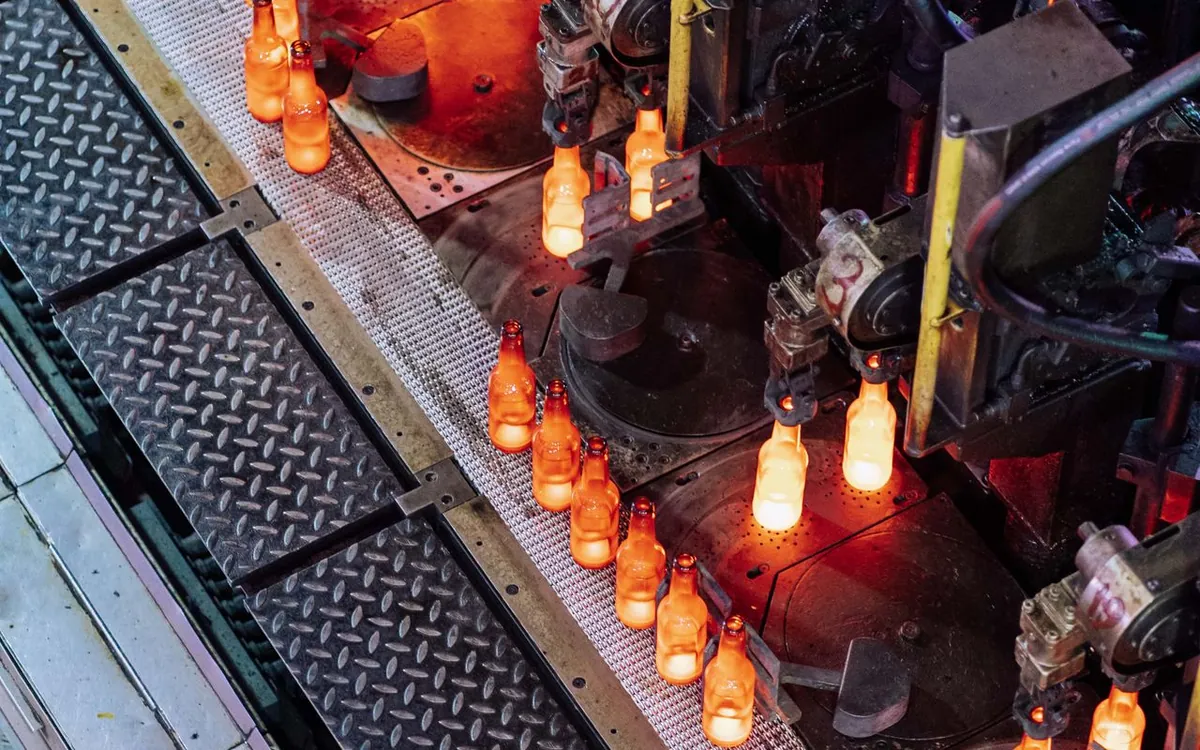
Sichuan has a high share of hydropower, and the wet-dry season difference is a variable other provinces do not have. From June to October in the wet season, power prices are low and plants tend to raise the electric boosting ratio and cut gas consumption; from December to April in the dry season, prices rise and they switch back to gas. Back and forth, the electrode sees cyclic power changes, and thermal-shock damage from repeated load swings accumulates. Based on local operating experience, electrode life in such furnaces is often 8%-12% shorter than under steady operation.
There is a subtler disturbance: some plants participate in demand response and briefly reduce load when the grid is tight. If load is shed faster than the rate the electrode can tolerate, a large temperature gradient builds at the junction between the electrode end and the block bore, and cracks often start there. This damage is invisible at the time and only shows up at the next full-load run.
The countermeasures are not complicated. Annual contracts can specify two sets of operating parameters, one for the wet season and one for the dry season, with the switchover date, power ramp rate and inspection items spelled out; tighten monitoring of clamp temperature and cooling-water return for 24 hours before and after each switch; and log every switchover in the electrode file, so that after two or three cycles the pattern of life decay becomes visible. When a supplier prepares a life statement, this local factor should be included; applying experience values from coastal furnaces directly is not appropriate.
Selection and Specification Recommendations
Molybdenum electrodes for glass furnaces commonly range from 50 to 100 mm in diameter and 500 to 1,500 mm in length, with purity controlled at Mo ≥ 99.95% and density ≥ 9.8 g/cm³. These are typical values; actual practice follows the operating conditions and the contract. The key to selection is not the data sheet but matching the parameters to the furnace type.
- Glass fiber tank furnace: prioritize density and corrosion resistance, and match the end structure to the water-cooled jacket and the block bore; control iron, nickel and other impurities to a tighter range to avoid localized defects during long high-temperature campaigns.
- Electronic and pharmaceutical glass: supply in polished condition, with diameter tolerance, straightness and end-face squareness as hard requirements; the surface must be free of oxidation tint, scratches and impact marks, and packaging must withstand repeated handling.
- Solar furnace: boosting power density is higher, so choose a grade with better corrosion resistance and check that the electrode layout in the fining zone matches the flow field to avoid local overheating.
- Connection method: threaded joints must match contact resistance and tightening torque; clamp joints must ensure an unobstructed cooling-water path; both should be measured for contact resistance once before installation.
One point beyond specifications is often missed: electrodes at different positions in the same furnace do not see the same conditions. Temperature and corrosion intensity differ greatly between the fining zone, the waist and the forehearth, so buying one specification for everything looks convenient but lets some positions fail early. Listing specifications by position is how you spend money where it counts. For more on structure and interfaces, see the specifications for molybdenum electrodes in glass melting furnaces, and for glass fiber furnace differences see the glass fiber tank furnace electrode page.
Reference Cost Structure
The composition of the purchase price is fairly stable, but the shares shift with specification and order quantity. The table below summarizes reference ranges for standard specifications; it is for budgeting and price comparison only, and quotations and contracts govern.
| Cost item | Share range | Main influencing factors |
|---|---|---|
| Raw material (molybdenum powder, molybdenum bar) | 55%-65% | Tracks molybdenum concentrate and powder prices; repriced monthly |
| Processing (forging, rolling, machining) | 15%-22% | Upper end for polished condition and high length-to-diameter ratios |
| Testing (density, flaw detection, composition) | 3%-5% | Higher when every piece is flaw-detected |
| Packaging and logistics | 4%-8% | Long haul into Sichuan; strict moisture protection and wooden crate requirements |
| Management and service | 5%-8% | Includes warranty and allocated field technical support |
Supplementary note on the basis: electrode products are controlled for composition and tolerances per YS/T 1312-2019 Molybdenum Electrodes; molybdenum rods per ASTM B387 / GB/T 17792; molybdenum plates and discs per ASTM B386 / GB/T 3876; special requirements per the technical agreement between the parties.
Two cautions. The raw material share moves with molybdenum prices, and quotations are usually indexed to the monthly raw material price, so a long-term contract must state the price adjustment mechanism. The processing share rises noticeably for polished condition, high length-to-diameter ratios and non-standard threads, so align the technical requirements before comparing prices; otherwise the quotes are not comparable.
Supply Radius and Typical Logistics Times
Finished electrodes used in the province come mainly from outside. Chengdu and Zigong have a base in tungsten-molybdenum processing and cemented carbide, but finished glass-furnace electrodes still depend on external supply, mainly from Luoyang in Henan, Baoji in Shaanxi and East China. Road transport by full truckload dominates; for larger volumes, rail service plus road transfer can save about a day.
| Shipping origin | To Chengdu | To Zigong, Luzhou | To Guang'an, Dazhou | Notes |
|---|---|---|---|---|
| Luoyang, Henan | About 2-3 days | About 3 days | About 3-4 days | Rail plus road transfer saves about 1 day |
| Baoji, Shaanxi | About 1-2 days | About 2 days | About 2-3 days | Via the Qinling corridor; allow margin in the rainy season |
| Jiangsu, Zhejiang | About 3-4 days | About 4 days | About 4-5 days | Mainly road; times fluctuate more |
| Local processing in Chengdu | Same day-1 day | 1-2 days | 1-2 days | Confirm polishing and flaw-detection capability |
Times are based on normal full-truckload transport; actual delivery depends on the carrier's schedule and weather. Allow margin when crossing the Qinling section in the rainy season. For continuously running glass fiber tank furnaces, build transit time into safety stock rather than scheduling backwards from the order date.
Replacement and Maintenance Rhythm
The rhythm differs greatly by furnace type. Electrodes in glass fiber tank furnaces are mostly replaced with forehearth hot repair or tank cold repair, and cold-repair cycles typically run six to ten years; boosting electrodes may be replaced locally during operation, at intervals that depend on power and corrosion, commonly 12-24 months. Small electronic glass furnaces have shorter cold-repair cycles of three to five years, and replacement is often scheduled together with the refractory blocks; container and pharmaceutical glass furnaces are more flexible, with maintenance usually done during the shutdown around Chinese New Year.
The core of maintenance is record-keeping. Each electrode should carry a number, batch, installation date, cumulative operating hours, position and reason for replacement. Together with monthly current, voltage and clamp temperature-rise data, this builds the plant's own life curve within two or three years. With that curve, stocking and budgeting have a basis, and supplier recommendations become easier to verify.
Common Failures and Prevention
- Oxidation above the melt line: the exposed section is consumed faster in a hot oxygen-bearing atmosphere; shortening the exposed length, fitting a protective sleeve or applying a surface treatment can mitigate it, and protection during shutdown matters just as much.
- Thermal-shock cracking: seen mainly during wet-dry switchovers and demand-response load cuts; controlling the power ramp rate and avoiding sudden heating or cooling is the fundamental remedy.
- Forehearth erosion: wear accelerates where glass flow velocity is high; choose a denser grade and measure the remaining end length at regular intervals.
- Rising clamp contact resistance: shows up as abnormal clamp temperature rise, usually from oxidized contact faces or insufficient torque; regular cleaning and retightening prevent it.
- Sagging and bending: occurs with high length-to-diameter ratios and insufficient support; ensure coaxiality and block-bore clearance at installation, and add support where necessary.
Failure is rarely a single cause. Oxidation thins the cross-section, thermal shock initiates a crack at a weakened location, and erosion thins the end; the three together cause the break. To diagnose an incident, review the power curve, water-quality records and shutdown records together rather than staring at the fracture surface alone.
Stocking Recommendations
A safety stock of three to six months' consumption for standard sizes is reasonably prudent, while long-lead sizes and polished orders should be locked in four to six months before a cold repair. Before the wet season, around May, is the point at which the power regime switches; restock ahead of it to avoid concentrated buying during the switch pushing lead times up.
The relationship with the supplier is also worth managing annually: give rolling forecasts in exchange for reserved capacity; consolidate non-standard sizes into a few dimensions to reduce changeovers; and for group customers operating across regions, start head-office-level qualification early, which usually takes an annual cycle.
Note: capacity, consumption and price figures in this article are compiled from public information and industry exchanges; statistical definitions and timeliness may change. They are for industry reference only and do not constitute a basis for procurement or investment. Official information released by authorities and companies prevails.
Frequently asked questions
Which furnace clusters and customer types are typical for molybdenum electrodes?
Local furnaces use oxy-fuel combustion with electric boosting at about 25%, and furnace pressure and fining temperature are controlled differently from air-fired furnaces, with electrodes positioned closer to the fining zone.
How does seasonal power pricing change the electrode duty cycle?
Sichuan has a high share of hydropower, and the wet-dry difference is a variable other provinces do not have. From June to October in the wet season power prices are low and plants tend to raise the electric boosting ratio and cut gas consumption.
What are the stocking recommendations for molybdenum electrodes?
Before the wet season, around May, is the point at which the power regime switches, so restock ahead of it to avoid concentrated buying during the switch pushing lead times up. A safety stock of three to six months' consumption for standard sizes is reasonably prudent, and long-lead sizes and polished orders should be locked in four to six months before a cold repair.
Note: this article shares general industry and technical information and is not purchasing, investment or legal advice. Specific parameters and results are governed by the mutual technical agreement and factory inspection records.
Standards note: electrodes are controlled to YS/T 1312-2019 Molybdenum Electrodes; molybdenum rods to ASTM B387 / GB/T 17792; molybdenum plate and discs to ASTM B386 / GB/T 3876. Parameter ranges in this article summarise public technical data and engineering practice — actual values vary with furnace conditions and are governed by the technical agreement and inspection records.
Related products
Electrodes and high-temperature molybdenum parts for this duty — specifications and selection notes are on the product pages.
Product information

Fiberglass tank furnace molybdenum electrode
For electric boosting in fiberglass tank furnaces; supports bushing drawing with steadier melting and fiber quality.
View specifications →
Glass melting furnace molybdenum electrode
For electric boosting and all-electric melting of container, packaging, pharmaceutical, photovoltaic and electronic glass, compatible with mainstream refractories and furnace designs.
View specifications →
Molybdenum stream mouth
Discharge nozzle at the end of fiberglass and aluminosilicate fiber forehearths; water-cooled or water-free oxidation protection, high-temperature and anti-clogging, custom to furnace drawings.
View specifications →