Guangdong Molybdenum Electrodes: A High Value-Added Glass Route Under High Electricity Prices
WeiBeam · Electrode solutions for high-temperature melting
Guangdong's industrial electricity price is about 0.60 yuan/kWh and its glass product mix skews premium, with electrode consumption concentrated in multi-variety small furnaces. The article explains how high electricity prices narrow the all-electric melting route, how power fluctuations with tariff periods affect service life, and the selection and pre-positioned inventory requirements created by panel color difference and container glass changeovers.
Guangdong's glass industry ranks high in output value, and its product mix skews premium. Operating float capacity is about 12,000 t/d, distributed across Dongguan, Jiangmen, Qingyuan and Foshan; deep processing is centered on Foshan, where automotive glass, appliance panels, high-end architectural glass and container glass converge. Judging from public capacity and electric melting applications, a considerable share of the province's molybdenum electrode consumption comes from multi-variety small container glass furnaces. To understand Guangdong, one must first understand electricity prices and product prices here.
Industry Structure and Demand Characteristics
By category, container glass, pharmaceutical glass and float electric boosting are the main consumption points, followed by fiberglass and photovoltaic glass; the remainder goes to high-temperature applications such as electronics manufacturing, vacuum coating and semiconductor packaging. Guangdong's float furnaces are mostly 800-1,000 t/d, highly automated, with complete deep processing support, and an electric boosting ratio of about 25%-30%.
Estimating consumption cannot rely on float tonnage alone. There are many deep processing operations and small furnaces locally; per-furnace consumption is small but changeovers are frequent and electrode replacement cycles are short, so actual consumption often exceeds what float capacity alone would suggest. Only by including deep processing and electronics manufacturing in the calculation does the estimate approach reality.
The balance between high electricity prices and high selling prices means Guangdong will not simply copy the all-electric melting route of the north. Ordinary architectural glass has a limited unit selling price, and the energy cost of all-electric melting is hard to absorb; automotive glass, appliance panels, ultra-clear ultra-thin and coated products can sell for two to three times the price of ordinary architectural glass and can bear higher energy expenditure. Local furnaces therefore favor electric boosting, using electrodes at key positions that improve uniformity and refining rather than as the main heat source for the whole furnace. In selection, look at product value first and power configuration second; the order cannot be reversed.
Key Furnace Clusters and Customer Types
Dongguan, Jiangmen, Qingyuan and Foshan form the main clusters for float and deep processing. Foshan is known for appliance panels, automotive glass, high-end architectural glass and container glass, with dense supporting companies; cosmetics and perfume bottle makers around Jiangmen often use all-electric or electric boosting small furnaces with frequent changeovers; Dongguan and Shenzhen lean toward electronic glass, coating and packaging support.
Customer types fall roughly into four: large deep processing and automotive glass companies, focused on batch consistency and delivery; appliance panel suppliers, focused on color difference control and long-term stability; small container glass furnaces, focused on specification flexibility and fast replacement parts; and electronics and coating companies, focused on impurity control and surface cleanliness. What the four have in common is sensitivity to line stoppages and relatively higher tolerance for unit price.
In terms of supply structure, Guangdong has no sizable electrode manufacturing locally, and the import share is above the national average, with goods also coming from Jiangsu, Shandong and the Central Plains. Imported products have an accumulated record of batch stability but long lead times and little room for negotiation; domestic substitutes have improved markedly in density and dimensional consistency in recent years and are suitable for trial use at non-critical furnace positions first. For buyers, a practical approach is to separate critical from non-critical positions, keep proven sources at critical positions and gradually introduce substitutes elsewhere, reducing the risk of a one-time switch.
Local Cases: Panel Color Difference and Container Changeovers
An appliance panel deep processing plant in Foshan once encountered a batch of panels with excessive color difference. Investigation found that electrode power on one forehearth of the primary glass furnace had drifted, changing the temperature distribution of the glass melt. The plant then required suppliers to provide electrode operating data by product line and to use the daily power curve as a selection input, rather than reporting only furnace tonnage.
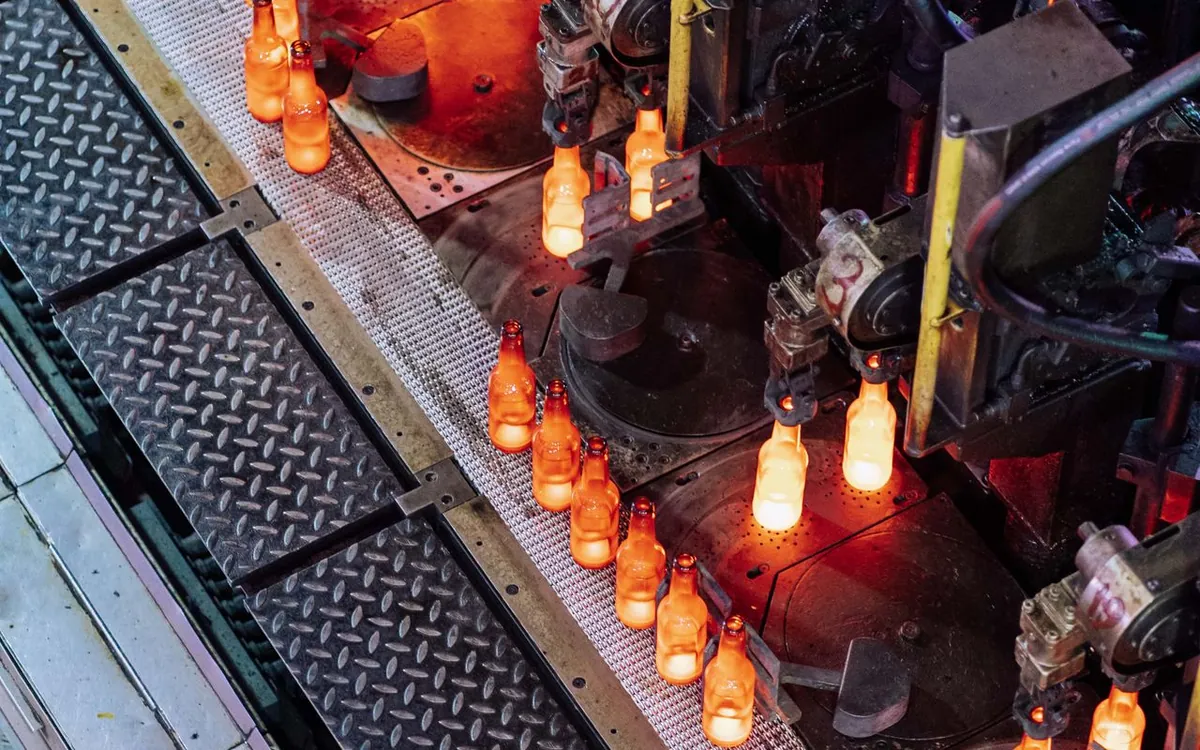
A container glass company in Jiangmen making cosmetics bottles runs small furnaces with many varieties and changes formats several times a month. The plant keeps electrodes and orifice parts as small-batch standing stock, drawn in advance according to the changeover plan to avoid ad hoc purchasing. The cost is tied-up inventory; the benefit is that changeovers no longer wait for parts.
An electronic glass supplier in Dongguan writes surface cleanliness into its acceptance criteria, requiring moisture-proof, dust-proof packaging on arrival and installation in a clean environment after unpacking. Such orders are modest in volume but demand high batch consistency and packaging integrity.
All three cases point to the same thing: the problem in Guangdong is often not that electrodes cannot be bought, but that the batch bought is inconsistent with what is in service. Color difference, power drift and waiting for parts during changeovers look like production issues, but tracing them back often reveals a supply rhythm issue. Connecting operating data, batch numbers and replacement records reduces line stoppages far more effectively than simply pushing down unit price.
Selection and Specification Recommendations
For refining and forehearth positions in float and deep processing, electrodes of 75-100 mm diameter are common, with typical purity no less than 99.95% and a density reference range of 9.6-9.9 g/cm³. Because power is reduced during peak periods and raised at night, selection should focus on thermal shock resistance and high-temperature strength rather than room-temperature indicators alone.
Small container and pharmaceutical glass furnaces mostly use 40-60 mm specifications, with attention to dimensional consistency and surface condition; electronic glass and coating support place more emphasis on impurity control. Refer to the material selection notes for glass furnace molybdenum electrodes and confirm item by item against the working conditions. All parameters are typical values or reference ranges; actual conditions and contracts prevail.
Guangdong's operating characteristics determine the selection order. Thermal shock resistance, high-temperature strength and contact stability should be considered before density indicators; at the same specification, products with uniform grains and few internal defects handle repeated power cycling more comfortably. Buyers should provide the power curve for a typical day, peak and off-peak periods and forehearth temperature distribution so the supplier can recommend specifications and installation. If curves are unavailable, at least state the daily power fluctuation range and the frequency of power interruptions; this information is more useful than a tonnage figure.
Reference Cost Structure
Guangdong has long logistics distances and high testing requirements, so its cost structure differs from northern production regions. Percentages are reference ranges; actual values are subject to quotation and contract.
| Cost item | Reference share | Notes |
|---|---|---|
| Raw materials such as molybdenum powder | 55%-65% | Varies with molybdenum powder market; notable premium for high-end grades |
| Forming, sintering and machining | 15%-22% | Higher share for large-size and high-density products |
| Testing and quality records | 6%-9% | Premium customers require density, purity, flaw detection and batch traceability |
| Packaging and logistics | 8%-12% | Long haul; higher cost for wooden cases, moisture protection and insurance |
| Service and other | 3%-6% | Pre-positioned inventory, rapid response and on-site support |
Supplementary note on the standards basis: electrode products are controlled for composition and tolerance in accordance with YS/T 1312-2019 'Molybdenum Electrodes'; molybdenum rods follow ASTM B387 / GB/T 17792; molybdenum plates and discs follow ASTM B386 / GB/T 3876; special requirements are executed per the technical agreement between the parties.
Guangdong customers are more sensitive to lead time and quality than to unit price. A one-day delay that stops a line often costs more than the price difference on the electrodes themselves. Cutting the logistics and packaging budget may save money in the short term but can be entirely offset by a single damage incident or delay.
For deep processing customers, electrode cost is a small share of the total glass sheet cost, but color difference and rework losses caused by electrode anomalies can be several times larger. Shifting budget from unit price to stability is the more realistic mindset for the Guangdong market; rather than shaving a few yuan per kilogram, write batch consistency and delivery into the contract.
Supply Radius and Typical Logistics Lead Times
From the Central Plains production region to destinations across Guangdong, distances are long; typical lead times are as follows, as reference ranges for road transport, excluding extreme weather and holiday congestion.
| Destination | Reference distance | Less-than-truckload | Full truckload |
|---|---|---|---|
| Shaoguan, Qingyuan | 1,300-1,400 km | 3-4 days | About 3 days |
| Foshan, Guangzhou | 1,400-1,550 km | About 4 days | 3-4 days |
| Dongguan, Jiangmen | 1,500-1,600 km | About 4 days | 3-4 days |
| Shenzhen | 1,550-1,650 km | 4-5 days | About 4 days |
With long distances and heavy cargo, less-than-truckload shipments with multiple transfers increase the chance of end damage. Bulk purchases should go by full truckload; urgent replacement parts can go by air, but packaging, insurance and arrival inspection must be agreed separately. Suppliers with local warehousing capability have an advantage in response speed.
Long-distance transport also involves climate differences. South China is humid, so moisture protection of wooden cases and storage conditions after arrival should be agreed together; in the rainy season, check for condensation inside the case before unpacking. Air freight for replacement parts is costly and suits small urgent items, while large specifications still go by full truckload, with the case secured during transit to prevent shifting under sudden braking. Shipments in the rainy and typhoon seasons need buffer time, since booking and road transport may both be extended, and safety stock should be raised accordingly; for customers who cannot tolerate material shortages, the contract should specify a backup transport plan and confirm space a week in advance. Large electrodes should not be split for consolidated shipping, to avoid repeated handling damaging the ends.
Replacement and Maintenance Rhythm
Float electric boosting electrodes in Guangdong typically last about 18-26 months, small container glass furnaces about 10-16 months, and pharmaceutical glass about 12-18 months. Because electricity is expensive, electrode power is managed carefully in operation: reduced during daytime peaks and raised during nighttime valleys. This tariff-driven operating pattern exposes electrodes to more frequent thermal cycling, and service life is typically 10%-15% shorter than under steady operation.
For maintenance, record the power curve daily, check forehearth temperature distribution weekly and measure diameter shrinkage monthly. When color difference, striae or bubble anomalies appear, compare with electrode data from the same period first, then decide whether early replacement is needed. Schedule electrode changes in the off-season or during planned maintenance to avoid downtime in peak season.
Guangdong's electrode change windows must also match order seasonality. Peak seasons for appliance panels and beverage bottles fall in mid-year and before holidays, when furnaces are reluctant to stop, so changes are mostly scheduled in the off-season or during planned maintenance. If shrinkage approaches the threshold before peak season, it is better to replace early than to gamble on one peak season. Inspect more frequently in the first two weeks after replacement, confirm power and temperature distribution are stable, then return to the normal frequency.
Common Failure Modes and Prevention
- Thermal cycling cracks. Frequent peak-valley power switching accumulates microcracks at grain boundaries. Limit the rate of power change and avoid large short-term swings.
- Power drift causing color difference. Electrode shrinkage or changes in contact resistance shift the temperature distribution; check against the curve and replace early.
- End oxidation and diameter shrinkage. Accelerated by poor sealing or an oxidizing atmosphere; check brick hole sealing and furnace pressure.
- Thinning from glass melt scour. Common in high-flow forehearths and orifice positions; choose high-density products and optimize installation depth.
- Contact arcing. Oxidized clamping surfaces or insufficient pressure cause local overheating; grind before installation and re-tighten regularly.
It is worth noting that color difference and striae have many causes, and electrodes are only one of them. Recording batch, furnace pressure and forehearth temperature together prevents misdiagnosis; attributing every problem to electrodes easily leads to replacing the wrong part and wasting money.
Stocking Advice for Buyers
Guangdong suits a combination of pre-positioned inventory plus rapid response: keep common specifications in a regional warehouse with safety stock at 10%-15% of annual consumption; write inventory pre-positioning and response times into the contract, and require suppliers to provide operating data by product line. Price can be negotiated, but not at the expense of batch consistency.
Pre-positioned inventory does not end with pushing goods onto the supplier; the inventory structure should be designed jointly: common specifications replenished weekly, long-tail specifications made to order, and safety stock set at 10%-15% of annual consumption. Stating response time limits, out-of-stock liability and emergency transfer arrangements in the contract is more meaningful than agreeing on a total price alone. For long-standing customers, review inventory and consumption quarterly to keep the specification mix from drifting away from actual use.
Note: capacity, consumption, price and other data in this article are compiled from public sources and industry exchanges; statistical definitions and timeliness may change. They are for industry reference only and do not constitute a basis for procurement or investment. Official information released by competent authorities and enterprises prevails.
Frequently asked questions
What do the local cases for molybdenum electrodes illustrate?
All three cases point to the same thing: the problem in Guangdong is often not that electrodes cannot be bought, but that the batch bought is inconsistent with what is in service. An electronic glass supplier in Dongguan writes surface cleanliness into its acceptance criteria, requiring moisture-proof, dust-proof packaging on arrival and installation in a clean environment after unpacking.
What are the key furnace clusters and customer types?
Customer types fall roughly into four: large deep processing and automotive glass companies, focused on batch consistency and delivery. In terms of supply structure, Guangdong has no sizable electrode manufacturing locally, and the import share is above the national average, with goods also coming from Jiangsu, Shandong and the Central Plains.
How should the stocking advice for buyers be implemented?
Guangdong suits a combination of pre-positioned inventory plus rapid response: keep common specifications in a regional warehouse with safety stock at 10%-15% of annual consumption.
Note: this article shares general industry and technical information and is not purchasing, investment or legal advice. Specific parameters and results are governed by the mutual technical agreement and factory inspection records.
Standards note: electrodes are controlled to YS/T 1312-2019 Molybdenum Electrodes; molybdenum rods to ASTM B387 / GB/T 17792; molybdenum plate and discs to ASTM B386 / GB/T 3876. Parameter ranges in this article summarise public technical data and engineering practice — actual values vary with furnace conditions and are governed by the technical agreement and inspection records.
Related products
Electrodes and high-temperature molybdenum parts for this duty — specifications and selection notes are on the product pages.
Product information

Glass melting furnace molybdenum electrode
For electric boosting and all-electric melting of container, packaging, pharmaceutical, photovoltaic and electronic glass, compatible with mainstream refractories and furnace designs.
View specifications →
Molybdenum stream mouth
Discharge nozzle at the end of fiberglass and aluminosilicate fiber forehearths; water-cooled or water-free oxidation protection, high-temperature and anti-clogging, custom to furnace drawings.
View specifications →
Fiberglass tank furnace molybdenum electrode
For electric boosting in fiberglass tank furnaces; supports bushing drawing with steadier melting and fiber quality.
View specifications →