20 Common Questions on Molybdenum Electrode Manufacturing: From Raw Material to Finished Product
WeiBeam · Electrode solutions for high-temperature melting
Why do molybdenum electrodes not follow the melt-casting route? How does molybdenum powder particle size affect the finished product? Can forging be omitted? This article organizes ten frequently asked questions on the powder metallurgy process in Q&A form, covering raw materials, forming, sintering, pressure working and inspection, to help purchasing and technical staff understand the trade-offs behind the process.
Powder metallurgy is the mainstream production route for molybdenum electrodes, yet concept confusion often arises during quotation discussions. Here the ten most frequently asked questions are organized as a Q&A, answered crisply in the language of engineers, to help readers build a complete understanding from powder to finished product. The questions unfold along three lines - raw materials, processing and quality - and each answer lands on an action a purchaser can verify.
Raw Materials and Forming
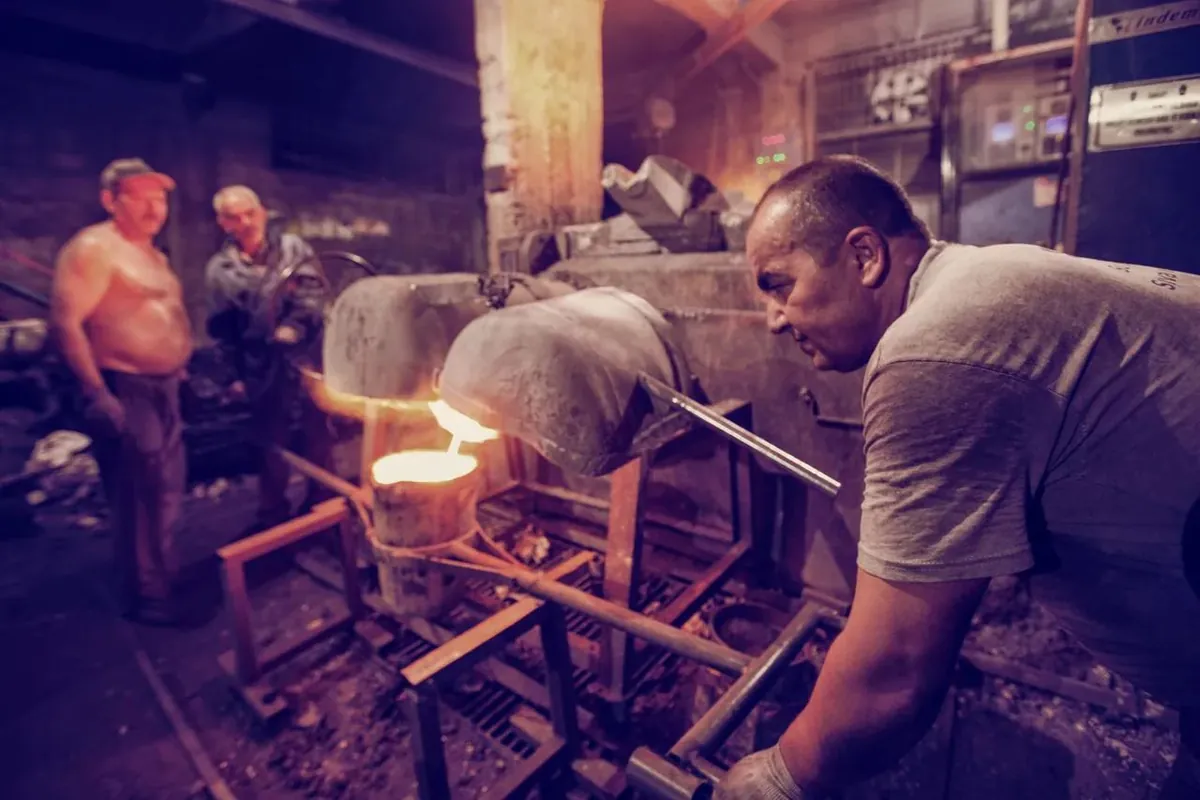
- Why not simply melt-cast? Molybdenum melts at as high as 2623 °C and reacts very easily with oxygen and nitrogen at high temperature. Melt casting requires a vacuum or protective-atmosphere water-cooled copper furnace, and structure control in large ingots is difficult; both cost and yield are inferior to the powder metallurgy route, which is why almost all molybdenum electrodes are made by powder metallurgy.
- Does molybdenum powder particle size matter? Yes. Fine powder in the micrometer range has high sintering activity and densifies more easily; particle size distribution and oxygen content together determine the upper density limit of the sintered billet, and they are the source of the whole process chain.
- Die pressing or isostatic pressing? Die pressing is efficient for small-section bars; cold isostatic pressing is used for large-diameter billets, giving clearly better density uniformity and reducing sintering cracks and structural segregation.
- Why is hydrogen commonly used for sintering? Hydrogen acts both as a protective atmosphere and as a reducing agent for surface oxides, and it also purifies. Vacuum sintering suits hydrogen-sensitive materials or special alloy systems; the densification effect of the two is similar.
Processing and Inspection
- Can forging be omitted? Not recommended for load-bearing electrodes. Sintered material contains residual porosity and is brittle; forging closes pores and refines grains, and it is the dividing line between strength and reliability.
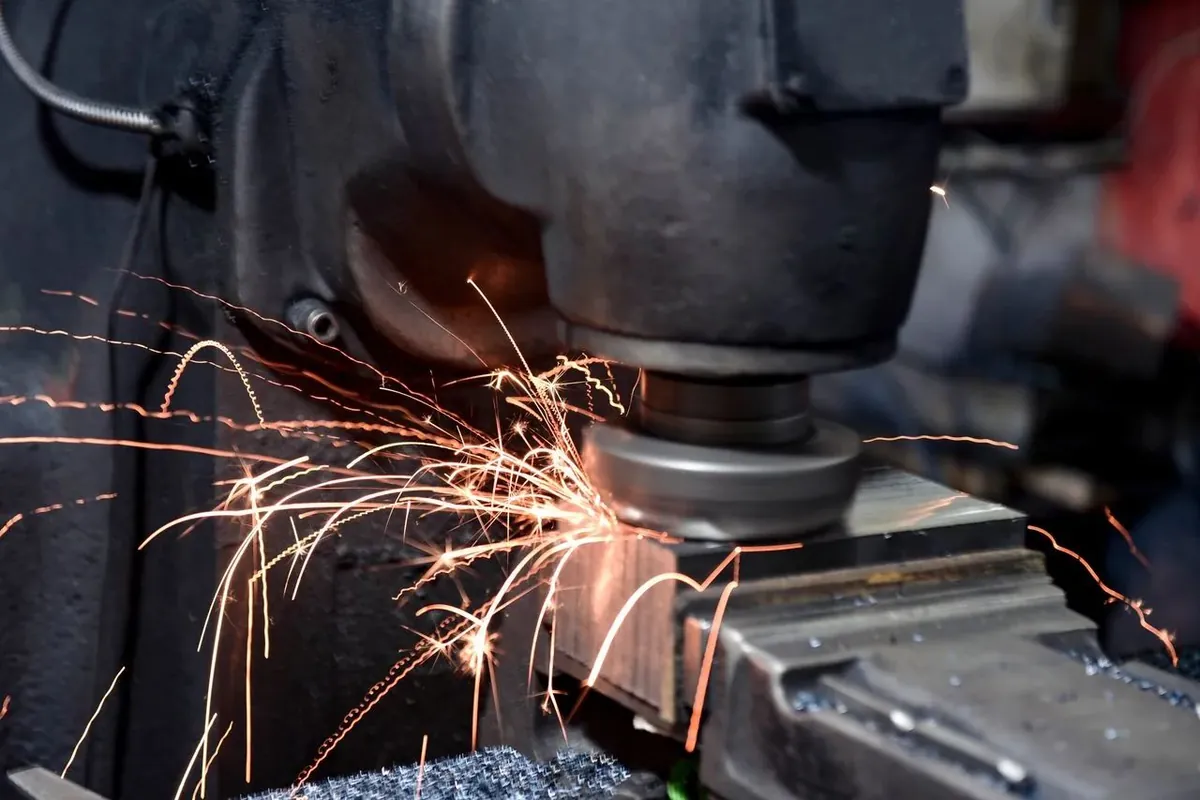
- What is the difference between turning, grinding and polishing? They differ in surface roughness and in the depth of the defective surface layer, which directly affect the initial corrosion site density after the electrode is charged into the furnace and the quality of contact at the clamp.
- How are internal defects found? Mainly by ultrasonic testing, supported by density measurement and metallographic sampling; after grinding, penetrant inspection can be added for surface-breaking defects.
- How is batch consistency achieved? Through lot management of raw materials, frozen process parameters and 100% dimensional inspection of finished products; any slack in one link shows up in the scatter of service life.
| Item | Value and notes |
|---|---|
| Common specifications | Rod diameter Φ20-100 mm, length 150-1500 mm (custom-made to drawing) |
| Applicable standards | YS/T 1312-2019 Molybdenum Electrodes; molybdenum rods follow ASTM B387 / GB/T 17792, molybdenum plate and disc follow ASTM B386 / GB/T 3876 |
| Working temperature | About 1300 °C long-term, short-term limit about 1600 °C |
Failure and Cost
- Which process step usually causes early electrode failure? Mostly grinding burn microcracks and edge microcracks caused by too low a temperature at the end of forging; these propagate under thermal stress after charging, so penetrant inspection before delivery cannot be omitted.
- Can machining scrap be recycled? Clean molybdenum chips can re-enter the oxide recovery flow, but chips contaminated with foreign matter do not go into electrode-grade billets; the recovery chain must be managed by quality grade.
Run through these ten questions and most quotation differences find a process explanation; understand the process chain and the scatter of electrode life is no longer mysterious. WeiBeam.com welcomes customers to bring these questions to the workshop and discuss them against the actual parts.
Frequently asked questions
What does the processing and inspection section cover?
Batch consistency relies on lot management of raw materials, frozen process parameters and 100% dimensional inspection of finished products; any slack in one link shows up in the scatter of service life. Surface roughness and the depth of the defective surface layer directly affect the initial corrosion site density after the electrode is charged into the furnace and the quality of contact at the clamp.
What does the raw materials and forming section cover specifically?
Molybdenum melts at as high as 2623 °C and reacts very easily with oxygen and nitrogen at high temperature; melt casting requires a vacuum or protective-atmosphere water-cooled copper furnace and structure control in large ingots is difficult, so both cost and yield are inferior to the powder metallurgy route, which is why almost all molybdenum electrodes follow it.
Note: this article shares general industry and technical information and is not purchasing, investment or legal advice. Specific parameters and results are governed by the mutual technical agreement and factory inspection records.
Standards note: electrodes are controlled to YS/T 1312-2019 Molybdenum Electrodes; molybdenum rods to ASTM B387 / GB/T 17792; molybdenum plate and discs to ASTM B386 / GB/T 3876. Parameter ranges in this article summarise public technical data and engineering practice — actual values vary with furnace conditions and are governed by the technical agreement and inspection records.
Related products
Electrodes and high-temperature molybdenum parts for this duty — specifications and selection notes are on the product pages.
Product information

Molybdenum disc
Circular sheet made from high-purity molybdenum powder by powder metallurgy and rolling; used for furnace heating elements, heat shields, boats and sputtering targets.
View specifications →
Molybdenum crucible
Molybdenum crucibles for sapphire growth, vacuum sintering and high-temperature melting; heat and melt-erosion resistant, sized to the furnace.
View specifications →
Molybdenum rod and shaft
Rod and shaft diameters beyond wire: Ø0.5–25mm drawn or swaged shafts and Ø16–300mm forged or sintered rods, for vacuum electronics, guide rods, electrodes and heating elements.
View specifications →