Machining and Grinding Essentials for Molybdenum Electrodes
WeiBeam · Electrode solutions for high-temperature melting
Molybdenum is reasonably machinable in the annealed state but prone to edge chipping and burn in the recrystallized and high-hardness states. Tool selection, cutting parameters, cooling and lubrication, and grinding wheel matching determine surface quality, which directly governs the initial corrosion site density after charging. This article gives a checklist of process essentials for machining and grinding.
The dimensional accuracy of an electrode is ensured by machining, but the lower limit of its life is often set by machining quality. Cutting and grinding a body-centered cubic metal such as molybdenum involves more rules than stainless steel; copying the shop-floor habits of conventional metalworking easily produces a batch of molybdenum electrodes with internal damage. The core of the machining procedure is to respect the brittleness window of the molybdenum electrode and cut it in the correct state.
Turning and Milling Essentials
The choice of machining state matters: annealed soft material has better plasticity and lower cutting resistance, while sintered hard and recrystallized states are brittle with a high risk of edge chipping, so annealing before machining is advisable, with large removal amounts taken in several passes, each leaving half a millimeter of finishing allowance. Use fine-grain carbide tools with sharp edges and sufficient clearance angle to avoid crushing blunt cuts; cutting parameters should be steady rather than aggressive, with continuous cooling and lubrication and no dry cutting, since local overheating generates an oxidized embrittled layer on the surface, which combined with subsequent grinding stress becomes a network of microcracks. Watch chip evacuation when parting off and drilling, as chip jam is a common cause of edge chipping; thin-walled parts and slender bars need optimized clamping to prevent chatter from leaving periodic tool marks; interrupted cutting and tool yield should also be avoided, because impact load is a direct cause of chipping in brittle molybdenum. Coolant concentration and filtration should be checked every shift, since hard particles will score finished surfaces, and grinding wheels should be dressed or replaced on a mandatory cycle according to their wear state.
| Item | Typical value and notes |
|---|---|
| Material and purity | Pure molybdenum / lanthanum-doped molybdenum / TZM available; molybdenum main content ≥99.95% |
| Common specifications | Rod diameter Φ20-100 mm, length 150-1500 mm (custom-made to drawing) |
| Applicable standards | YS/T 1312-2019 Molybdenum Electrodes; molybdenum rods follow ASTM B387 / GB/T 17792, molybdenum plate and disc follow ASTM B386 / GB/T 3876 |
The Art of Matching in Grinding
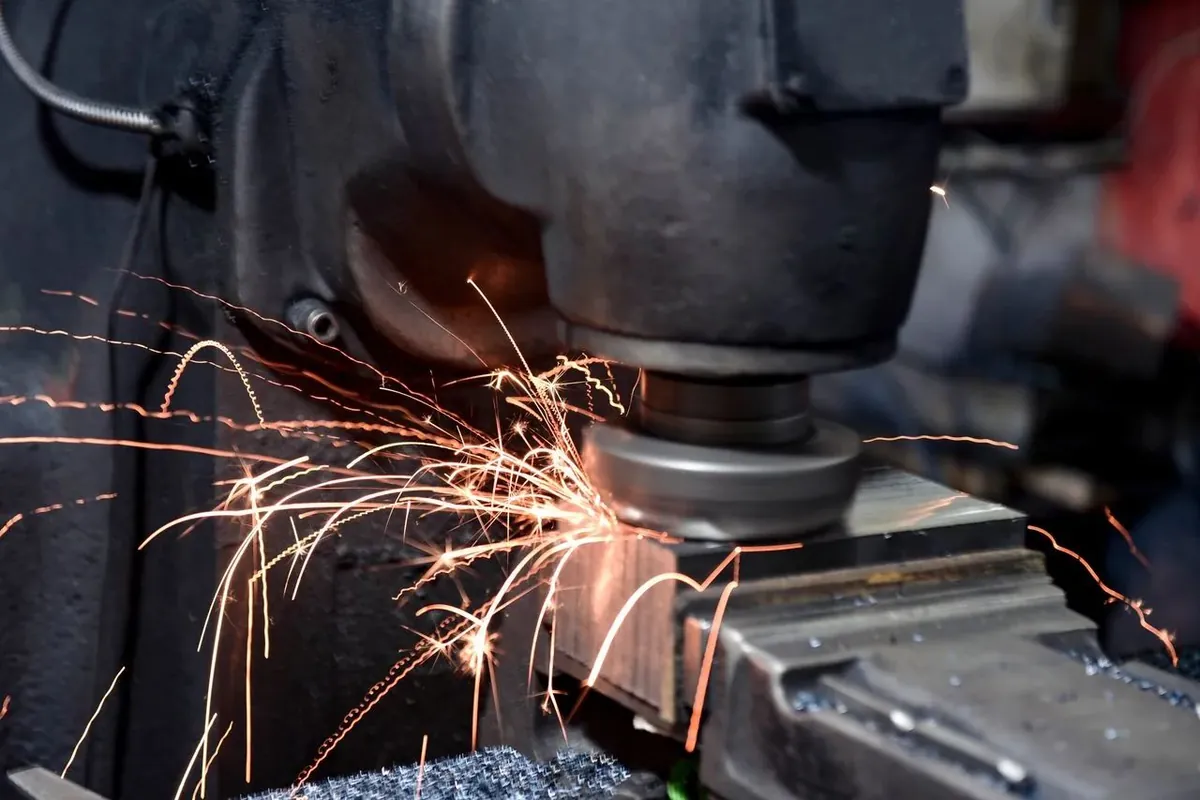
Grinding is the final gate for the surface quality of a molybdenum electrode. Green silicon carbide or diamond wheels are preferred, with grit graded for rough and finish grinding; feed and wheel dressing cycle must match, because a dulled wheel multiplies the burn risk; grinding feed and cooling intensity must be matched to prevent burn, and surface residual stress should be spot-checked by magnetic particle or eddy current methods, since the burnt layer appears under the microscope as a bright brittle band and is the first to spall and corrode after charging. The more uniform the surface roughness after grinding, the lower the initial corrosion site density, and the more stable the contact resistance at the clamp mating surface. Threaded sections are preferably roll-formed, giving continuous metal fibers and compressive stress at the surface that favors fatigue resistance; cut threads must have a properly rounded root and be deburred to avoid stress concentration.

Finishing Operations
- Ultrasonic cleaning and degreasing, because residual cutting fluid carbonizes at high temperature and contaminates the surface;
- Visual and tactile re-inspection of critical surfaces, with go/no-go thread gauges checked and recorded;
- Handle ground surfaces with gloves and pack them sealed, with no bare-hand contact afterwards.
Process notes on the machining and manufacturing steps are given in the technical process details.
At WeiBeam.com these details are frozen into work instructions on the route card, because shop-floor statistics show that a considerable proportion of early-failure electrodes can be traced back to machining. Build machining quality solidly and the lower limit of electrode life is protected; this is also the point worth watching beyond the quotation.
Frequently asked questions
In what order of priority should the turning and milling essentials for molybdenum electrodes be ranked?
Interrupted cutting and tool yield should also be avoided, because impact load is a direct cause of chipping in brittle molybdenum. Cutting parameters should be steady rather than aggressive, with continuous cooling and lubrication and no dry cutting, since local overheating generates an oxidized embrittled layer on the surface, which combined with subsequent grinding stress becomes a network of microcracks.
What does the art of matching in grinding cover?
Grinding feed and cooling intensity must be matched to prevent burn, and surface residual stress should be spot-checked by magnetic particle or eddy current methods, since the burnt layer appears under the microscope as a bright brittle band and is the first to spall and corrode after charging.
What should be noted in the finishing operations for molybdenum electrodes?
Visual and tactile re-inspection of critical surfaces, with go/no-go thread gauges checked and recorded. Build machining quality solidly and the lower limit of electrode life is protected; this is also the point worth watching beyond the quotation.
Note: this article shares general industry and technical information and is not purchasing, investment or legal advice. Specific parameters and results are governed by the mutual technical agreement and factory inspection records.
Standards note: electrodes are controlled to YS/T 1312-2019 Molybdenum Electrodes; molybdenum rods to ASTM B387 / GB/T 17792; molybdenum plate and discs to ASTM B386 / GB/T 3876. Parameter ranges in this article summarise public technical data and engineering practice — actual values vary with furnace conditions and are governed by the technical agreement and inspection records.
Related products
Electrodes and high-temperature molybdenum parts for this duty — specifications and selection notes are on the product pages.
Product information

Molybdenum disc
Circular sheet made from high-purity molybdenum powder by powder metallurgy and rolling; used for furnace heating elements, heat shields, boats and sputtering targets.
View specifications →
Molybdenum rod and shaft
Rod and shaft diameters beyond wire: Ø0.5–25mm drawn or swaged shafts and Ø16–300mm forged or sintered rods, for vacuum electronics, guide rods, electrodes and heating elements.
View specifications →
Glass melting furnace molybdenum electrode
For electric boosting and all-electric melting of container, packaging, pharmaceutical, photovoltaic and electronic glass, compatible with mainstream refractories and furnace designs.
View specifications →