MoWeiBeamMolybdenum Electrodes
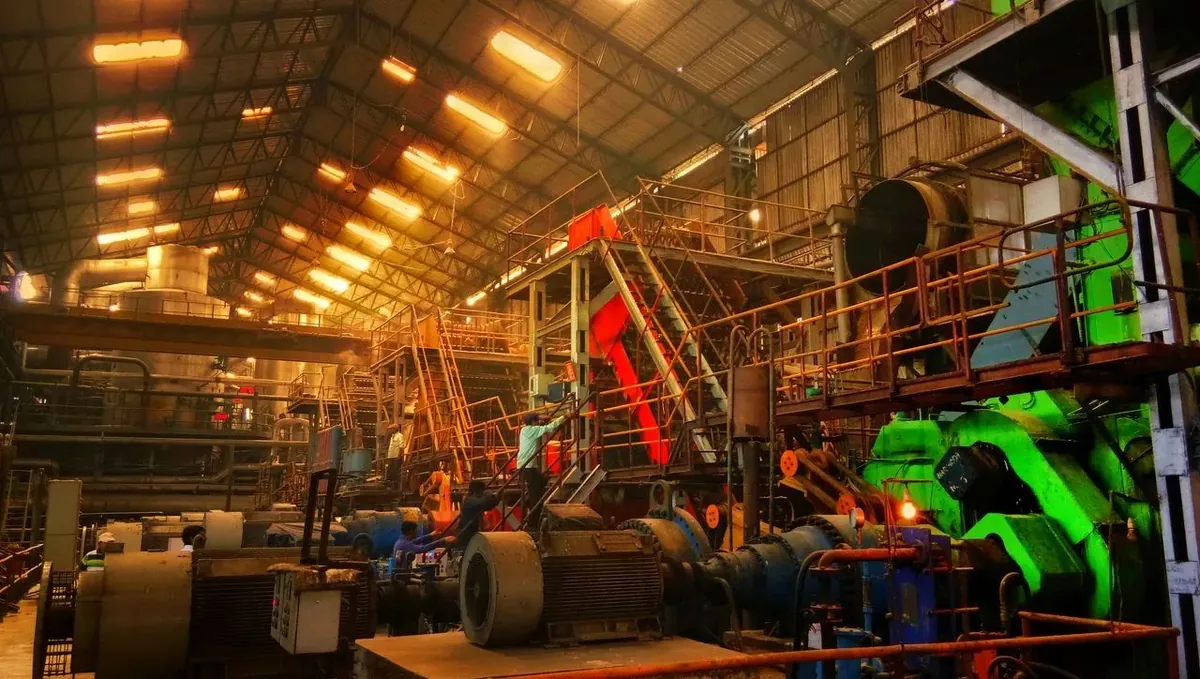
Metallurgical production floor

Industry news

Follow developments, technical notes and application practice for molybdenum electrodes, covering company updates, industry trends, technical reference and regional applications.

WeiBeam · Electrode solutions for high-temperature melting

Categories

Latest articles

Molybdenum Electrodes for Glass Fiber Tank Furnaces: Insulation and Power Matching Under High-Boron Formulations
Application Guides
Molybdenum Electrodes for Glass Fiber Tank Furnaces: Insulation and Power Matching Under High-Boron Formulations

E-glass melts at high temperature and has high melt resistivity, pushing the electrode challenge into the power supply and insulation system. This article maps the tank furnace molybdenum part list, the material boundary between high-temperature molybdenum and TZM, and two failure paths, grain-boundary penetration and current redistribution, as a reference for campaign-cycle purchasing.

Molybdenum Electrodes for Container and Packaging Glass: Consumption and Replacement Under Electric Boosting Retrofits
Application Guides
Molybdenum Electrodes for Container and Packaging Glass: Consumption and Replacement Under Electric Boosting Retrofits

Across bottle and jar, tableware, opal and crystal glass melting, this article breaks down how molybdenum electrodes differ in electric boosting, all-electric melting and forehearth electric heating, explains electrode spacing, colorant corrosion limits and batch replacement timed to furnace campaign life, and serves as a reference for furnace retrofits.

Machining and Dimensional Tolerances for Molybdenum Crucibles
Technical Encyclopedia
Machining and Dimensional Tolerances for Molybdenum Crucibles

This article covers turning, grinding and end-face machining of molybdenum crucibles, explains how workholding affects roundness and wall thickness variation, and describes how perpendicularity and surface roughness are inspected. It also sets out a five-step traceback path for out-of-tolerance dimensions, covering blank allowance, workholding, tooling, machine tool and measurement, so process and quality teams can work together.

Diagnosing the Causes of Molybdenum Crucible Cracking
Technical Encyclopedia
Diagnosing the Causes of Molybdenum Crucible Cracking

Replacing a cracked molybdenum crucible with a new one often lets the same problem return in the next batch. This article sets out an investigation along four lines: reading the fracture surface, verifying the material, reviewing structure and charging practice, and re-checking the thermal field. It explains what crack direction and fracture morphology indicate, and gives an attribution approach for single-part, batch-wide and fixed-azimuth failures.

How to Judge Molybdenum Electrode Quality: Seven Inspection Indicators
Technical Encyclopedia
How to Judge Molybdenum Electrode Quality: Seven Inspection Indicators

Differences in molybdenum electrode appearance are limited, so quality judgment must rest on verifiable data. This article breaks down seven indicators: molybdenum content, density, structure and grain, resistivity, dimensional tolerance, internal defects and batch consistency. It explains test methods, report pitfalls and the incoming acceptance flow, and reviews three cases where missed acceptance items caused early failure.

The Role of Internal Coatings in Molybdenum Crucibles
Technical Encyclopedia
The Role of Internal Coatings in Molybdenum Crucibles

This article discusses three functions of internal coatings in molybdenum crucibles: isolation, wetting adjustment and oxidation resistance. It explains that coating selection must match melt composition, service temperature and furnace atmosphere, and lists three contamination risks, namely coating particle shedding, interfacial reaction and high-temperature volatilization, with preventive measures for confirmation at the selection stage.

What to Look for in Molybdenum Powder Procurement: Particle Size, Apparent Density and Oxygen Content
Industry News
What to Look for in Molybdenum Powder Procurement: Particle Size, Apparent Density and Oxygen Content

Written for raw-material procurement in electrode billet production, this article explains how molybdenum powder particle-size distribution, apparent density, oxygen content and impurities such as iron, nickel and carbon affect pressing and sintering, and gives practical guidance on incoming sampling items, sampling coverage, sample retention periods and handling of abnormal batches so that purchasing and process staff work to one acceptance standard.

Custom Machining Process and Drawing Specifications for Molybdenum Electrodes
Technical Encyclopedia
Custom Machining Process and Drawing Specifications for Molybdenum Electrodes

The key to custom machining molybdenum electrodes is translating operating parameters into an executable drawing. This article lists the four categories of information needed before inquiry (form, connection, operating conditions and lead time), breaks down the process flow from drawing review to inspection and delivery, and gives drawing annotation rules, recommended tolerances and a comparison of threaded, welded and clamped connections.

Rolling Direction and Anisotropy in Molybdenum Plate
Technical Encyclopedia
Rolling Direction and Anisotropy in Molybdenum Plate

After multi-pass rolling, grains in molybdenum plate elongate along the deformation direction and a texture forms, so room-temperature strength, elongation and bending behavior change with the sampling direction. This article explains where the directionality comes from and how it shows up in test data, gives avoidance practice for blanking, bending, deep drawing and machining, and covers how purchasing and acceptance should specify rolling-direction marking and sampling orientation.

287 articles · Page 4 of 12